Tablero de Jesus: Difference between revisions
No edit summary |
No edit summary |
||
| (3 intermediate revisions by the same user not shown) | |||
| Line 14: | Line 14: | ||
[https://upload.wikimedia.org/wikipedia/commons/f/f4/Catalog_of_Copyright_Entries_3D_Ser_Vol_25_Pt_11B_(IA_catalogofcop197132511lib).pdf Link to scan of patent] | [https://upload.wikimedia.org/wikipedia/commons/f/f4/Catalog_of_Copyright_Entries_3D_Ser_Vol_25_Pt_11B_(IA_catalogofcop197132511lib).pdf Link to scan of patent] | ||
[https://books.google.com.au/books?id=2uYCAAAAMBAJ&lpg=PA89&ots=yB-KUsreDG&dq=%22Erzbergen-St.%20Susse%20Co.%22%20Croton-on-Hudson&pg=PA89#v=onepage&q=%22Erzbergen-St.%20Susse%20Co.%22%20Croton-on-Hudson&f=false New York Magazine Oct 1972 Cassifieds, advertising Tablero de Jesus for sale] | |||
<br> | <br> | ||
Finnr, on the An Tir unofficial discord server, mentioned "The first ever game of Tablero du Gucci was played with Vodka at a mundane party made up of mostly sca young adults. It was played by Andre Lassard and Tahnik with a large peanut gallery working out how to make it work with shots instead of coins.. Hard alcohol was off the list after that." | |||
<br> | |||
<br> | |||
Tablero (or Tablero de Jesus) is played on a 7 x 7 board of alternating colors. In SCA recreation, a chess board, with one row and one column at each end masked by tape, has often been used, but many custom Tablero board exist. Players sit on opposite sides of the board. Two six sided dice are used, along with coins. Players agree on a set number of coins they each will contribute. | Tablero (or Tablero de Jesus) is played on a 7 x 7 board of alternating colors. In SCA recreation, a chess board, with one row and one column at each end masked by tape, has often been used, but many custom Tablero board exist. Players sit on opposite sides of the board. Two six sided dice are used, along with coins. Players agree on a set number of coins they each will contribute. | ||
Latest revision as of 08:36, 24 November 2025
An elaborate and amusing hoax, purporting to be documentation of a medieval gambling game involving a chequered board similar to a chess board, dice and coins.
See https://web.archive.org/web/20050630234059/http://www.geocities.com/cartedatrionfi/Fragments/ElTablero.htmll or
https://web.archive.org/web/20060828060545/http://colynethorfinna.tworavens.org/GamesGuild/articles_tablero.htm
for information on the "history" of Tablero.
Further research has shown that "El Tablero de Jesus" (and it's fabricated backstory) was created around 1970/1971 by Peter or Parton Swift, Jr, and patented in 1971 for Erzbergent-St. Susse Co, a non-SCA source. The New York magazine (20 Dec, 1971), in the "Best Bits" section, mentions it both having a fabricated backstory, the creator, and it being for sale.
-
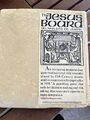 1971 Game box description
 -
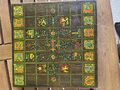 1971 (commercially made) game board.
 -
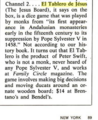 New York Magazine, Dec 20 1971, "Best Bits" section - mention of Tablero


New York Magazine Oct 1972 Cassifieds, advertising Tablero de Jesus for sale
Finnr, on the An Tir unofficial discord server, mentioned "The first ever game of Tablero du Gucci was played with Vodka at a mundane party made up of mostly sca young adults. It was played by Andre Lassard and Tahnik with a large peanut gallery working out how to make it work with shots instead of coins.. Hard alcohol was off the list after that."
Tablero (or Tablero de Jesus) is played on a 7 x 7 board of alternating colors. In SCA recreation, a chess board, with one row and one column at each end masked by tape, has often been used, but many custom Tablero board exist. Players sit on opposite sides of the board. Two six sided dice are used, along with coins. Players agree on a set number of coins they each will contribute.
Players roll off, high roller placing two coins in the two right most squares in the row closest to them (their "home" row). Low roller fills the remaining columns of their own home row with coins (five in total).
Each player takes turns throwing the dice. Each individual die result must be used to move a coin that number of spaces (forward or backward) on the board. A coin cannot have both dice applied to it. The desired object is to get two (or more) coins in adjacent columns in the same row, but not in home rows. At that point, a player may claim the coins, or keep rolling in hopes of lining up more coins. A variant states that if a player captures all 7 coins on their turn, they get an extra coin from their opponents reserve.
A player keeps rolling until:
- They claim a row of coins. Their opponent must now fill the empty columns in their home row with their own coins.
- They roll a 7, 11, or 12 on the dice.
In either case, the opponent now takes their turn at the dice. Note that if a row of coins exists when the dice pass (as their opponent was attempting to line up more coins), the opponent may claim the row without rolling the dice.
When one player cannot fill the empty columns after their opponent claims coins, the game is over an they lose.
See also: Tablero da Gucci for a popular An Tirian variation.
Personal note: I've seen Tablero da Gucci played countless times at events. I've never seen Tablero de Jesus played, only referenced as the source for Tablero da Gucci. Michelino di Gino Martini (talk) 15:50, 30 June 2025 (PDT)